







The Gut–Brain–Immune Axis
The first 1,000 days of life represent a critical period for immune and neurodevelopment. During this time, the infant gut does far more than support digestion, it plays a central role in immune education and communicates closely with the developing brain.
This connection, known as the gut–brain–immune axis, is increasingly recognized as an important framework in early-life nutrition. For healthcare professionals, it offers valuable insight into how infant feeding may influence digestive comfort, immune maturation, and long-term developmental outcomes.
The Gut as a Central Immune Organ
The gastrointestinal tract is the body’s largest immune organ, hosting around 70% of immune cells. In infancy, this system is still developing, and early microbial exposure helps guide immune education and maturation.
A balanced gut microbiota supports this process in several important ways. It helps:
-
Train innate and adaptive immune responses
-
Promotes immune tolerance
-
Contributes to the regulation of inflammatory tone
These early interactions are essential, as they help shape how the infant immune system responds to both harmless and potentially harmful stimuli.
When microbiota development is disrupted during this sensitive period, immune signaling may also be altered. This has raised growing scientific interest in how early gut health may influence not only immediate wellbeing, but also broader health outcomes later in life.
Understanding the Gut–Brain–Immune Axis
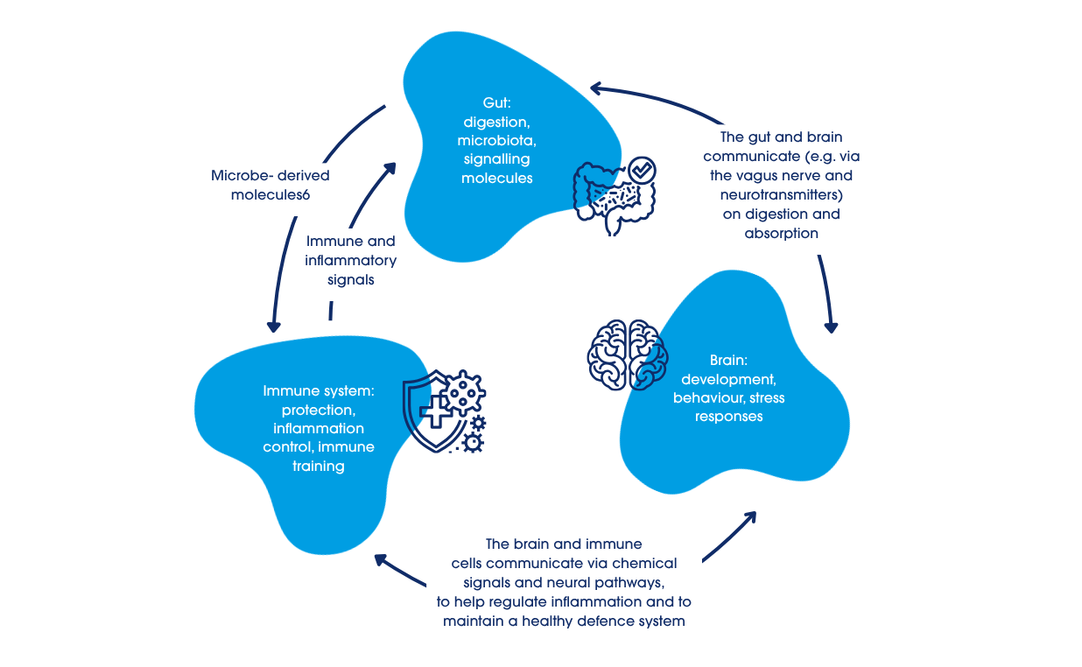
The gut, brain, and immune system function as a connected network rather than as separate systems. Communication within this axis occurs through neural, immune, and metabolic pathways, with the gut microbiome acting as a central mediator.
At the same time that immune programming is unfolding, the infant brain is undergoing rapid postnatal development, including synaptogenesis and neural circuit refinement. Emerging evidence suggests that the early-life microbiota may influence stress responsiveness, neurochemical signaling, and aspects of behavioral and cognitive development.
This dialogue is supported by multiple communication pathways. The gut and brain interact through signals involving the vagus nerve and neurotransmitters, influencing digestion, comfort, stress, and overall wellbeing. In parallel, the brain and immune system exchange chemical and neural signals that help regulate inflammation and maintain host defense. Together, these interactions form the basis of the gut–brain–immune axis and highlight the importance of supporting gut health during early life.
Why Early Nutrition Matters
Nutrition is one of the most important factors shaping the gut microbiota during infancy. This is why the first months of life are often described as a postnatal “window of opportunity,” during which appropriate nutrition may help support immune and developmental health.
Human milk remains the best nutrition for infant because it provides bioactive compounds that support gut maturation, immune development, and brain and visual function. These include:
- Natural prebiotics such as human milk oligosaccharides
- Probiotics and microbiota-supporting factors
- DHA and ARA
- Nucleotides
Together, these components help shape the intestinal microbiota and contribute to the development of the gut–brain–immune axis.
New Kabrita Supports Gut Microbiota Development
When breastfeeding is not possible, infant formula plays an important role in supporting infant nutrition. New Kabrita Goat Milk-Based Formula combines the natural benefits of goat milk with ingredients selected to support early gut microbiota development. Kabrita includes:
- Human-identical Milk Oligosaccharide (HiMO) 2'-Fucosyllactose (2'-FL)
- Naturally occurring goat milk oligosaccharides, including 3'-Sialyllactose (3'-SL) and 6'-Sialyllactose (6'-SL)
- GOS-GL, a prebiotic blend that provides additional microbiota-supporting oligosaccharides
- Bifidobacterium animalis subsp. lactis BB-12®, a clinically studied probiotic
- Naturally occurring beta-palmitate (OPO) and lactose, both also found in human milk and known to support digestive health and a favorable gut microbiota.
Together, these ingredients are designed to help support the establishment of a healthy gut microbiota during early life.
Conclusion
During the first 1,000 days, the gut microbiota plays a central role in programming immune responses and influencing brain development through the gut–brain–immune axis.
For healthcare professionals, this reinforces the importance of evidence-based nutritional support in early life. By considering how infant feeding shapes the microbiota, it becomes possible to support not only digestive comfort, but also broader immune and developmental outcomes.